Skip to content


GOG works in mysterious ways

Good Old Games

(Original image source.)

Good Old Games seems to be going from strength to strength. This unusual digital distribution service has won over major publishers in recent months, allowing it to reintroduce classic titles to an appreciative older audience as well as a whole new generation of gamers. The recent release of Master of Orion, Master of Orion 2 and the beloved Master of Magic, in particular, should be applauded for reminding everyone of the fantastic work done by SimTex Software‘s Steve Barcia, one of gaming’s forgotten designers. It’s also left many a gamer hoping for more titles from Microprose’s great catalogue.

(Dare one hope for Arnold Hendrick’s Darklands, fully patched up and DOSbox-ready?)

All’s not peachy keen, however.

GOG had to pull three Codemasters titles from its service last year because of licensing issues. It’s hard to blame GOG for this since the rights holder belatedly realised it didn’t actually have the full rights for Colin McRae Rally 2005, TOCA Race Driver 3 and Operation Flashpoint. In truth, there was little harm done as customers who had already purchased those games from GOG could download them as usual. This was a minor issue and well handled.

However, GOG does have a messy PR problem due to the way it goes about its business. A key selling point of the service has always been its games are guaranteed to be DRM-free. This meant games which originally shipped with DRM are stripped of it before being put on sale. While this extraordinarily brave policy left GOG very vulnerable to piracy, it was a policy that was universally hailed by gamers tired of intrusive and draconian DRM schemes. Here was a digital distribution service that got it. Here was a digital distribution service that understood customers do not take kindly to being treated like potential thieves after they have paid for a product. Here was a digital distribution service that truly deserved gamer support.

The problem was no one knew how GOG went about removing the DRM. The details are troubling to say the least.
Continued…


Posted in Games, Good Old Games.


Port Royale: piracy, trading, catering

Port Royale: piracy, trading, catering

Posted in Games, Good Old Games.


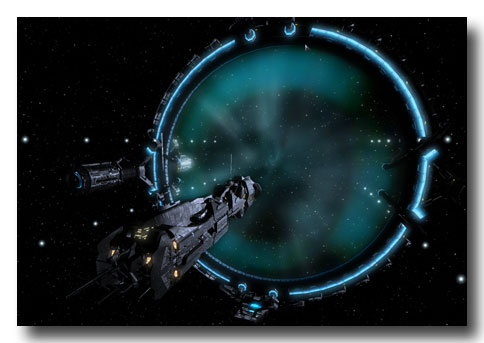
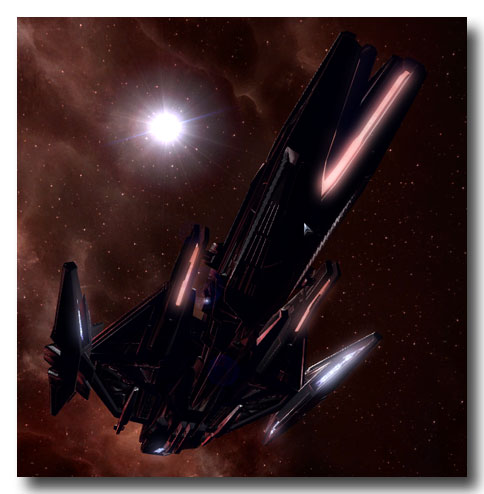
X3: Terran Conflict: Per ardua ad astra

X3: Terran Conflict: Transport

X3: Terran Conflict, a 2008 game from German developer Egosoft, is an anachronistic game. Whereas mainstream games are increasingly about shorter, tightly scripted experiences that straitjacket the player and confine him to predetermined paths, X3TC sets the player loose in a sprawling sandbox with little direction.

The player has a tiny ship at the start, few credits to his name and little in the way of prospects. How he proceeds next is left entirely up to him. There are scripted missions with storylines to be found but these can be freely ignored and there is otherwise little handholding or leading by the nose. This is a game tailor-made for the Explorer.
Continued…

Posted in Games, Reviews, X3.


X3: Terran Conflict: Encounter in Zyarth’s Dominion

Some time has passed since Operation Final Fury. With the Kha’ak threat greatly diminished, Argon Federation Marshall Kel Aylin turns to the other great foe plaguing the X Universe: the Xenon.

I scan sectors looking for potential hotspots and I find one. Telemetry from the advanced satellite I placed in Zyarth’s Dominion reveals Xenon raiders. This is a convincing show of force by the sentient machines: three fighters and an equal number of heavy fighters escorting the main threat, a Xenon Q frigate.

Zyarth’s Dominion is a Split sector and I have no license that would gain me profit from an engagement there. I am initiating this battle for purely emotional reasons. I have lost two merchant ships to Q marauders and I do not mean to lose a third.

X3: Terran Conflict: Cerberus

I engage my ship’s jumpdrive and enter the sector from the South gate. The Xenon force is 11km away when it notices me and begins turning in my direction.
Continued…

Posted in Games, X3.


X3: Terran Conflict

X3: Terran Conflict: Vidar

The X3: Reunion veteran might be forgiven for thinking Egosoft’s 2008 space trading/combat simulator, X3: Terran Conflict, is an expansion pack rather than a fresh new entry in the series. There will be a strong sense of déjà vu.

The sectors are the same, of course. The Argon Prime-Home of Light-Ore Belt-Cloudbase South East run remains the best way to buy and equip a merchant fleet or fighter wing. The ship designs are mostly similar and their utility is identical. The Mercury is as important an acquisition as ever, the Nova is as potent a dogfighter as always. Even the station prices are similar. Meatsteak Cahoonas are still 72 credits at Free Argon Stations everywhere.

The more of the same theme holds true of the mission designs, unfortunately. X3: Reunion’s missions weren’t especially well designed and X3: Terran Conflict’s missions, while slightly improved, are still a frustrating experience. Instead of confining players to a specific ship as in X3: Reunion, Egosoft now gives players complete freedom during missions. But this approach, too, could have been done better.

X3: Terran Conflict’s mission briefings provide only minimal information about objectives and, as a result, it’s all too easy to learn your current ship lacks sufficient firepower, your shields too weak or your speed too slow only when it is far too late. A hint during the briefing as to what may be required would have obviated any need to replay missions but then the designers of this game seem firmly convinced games should require investments of time rather than thought or skill.

The pace really is the main deterrent here. There are games with poor pacing, there are games with a plodding pace and there are even games with glacial pacing. Way beyond that, there are the X3 games. These games are huge timesinks on par with the worst of old MMO designs.

You will spend dozens of hours schlepping goods from sector to sector, reduced to staring at the screen while the autopilot moves your ship to a distant destination. The most damning indictment of X3: Terran Conflict’s pacing is the presence of a “Run game in background” mode.

Some of the design choices are truly baffling. For no discernible or defensible reason whatsoever, saving a game during flight requires an exhaustible item purchasable only at a few select locations. The game does include a timecompression feature but it is only available in a ship equipped with another specific device and then only during flight. In short, Egosoft has done whatever it could to needlessly extract as much time from the player as possible.

Despite X3: Terran Conflict’s flaws (and it has many more), it is still capable of producing moments of wonder and it is for this reason series veterans keep returning to it. It will take only one epic battle with titanic capital ships exchanging broadsides while fighters flit around dogfighting to forgive — but not forget entirely — the hours of mind-numbing drudgery.

Posted in Games, X3.