Skip to content


Days of might and magic

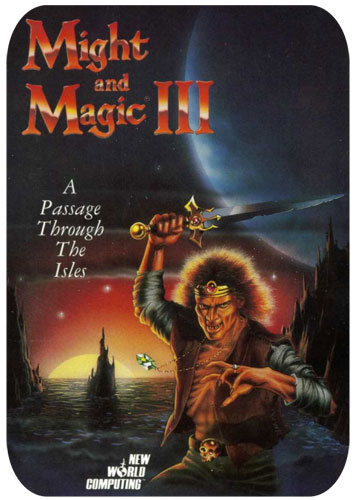
Might & Magic III: cover

Every once in a while I get an intense longing to try a game genre I’ve not experienced in a while. These cravings are entirely unexplainable and often lead me to strange purchasing decisions. I’m a big fan of the PlayStation Portable but I have to admit the main reason I got it back in 2005 was because suddenly, inexplicably, I had a yearning to rearrange falling blocks.

Flash forward to a few weeks ago, I had an intense longing to play a dungeon crawler. This longing was not entirely inexplicable, however. I was gritting my teeth through Shin Megami Tensei: Nocturne’s inconsistent designs right about then and I really wanted to play a game that did dungeon crawling right.

I specifically had a craving for Dungeon Master as it was to my mind still the finest example of the genre. I was very keen to discover if the FTL Games classic was every bit as good as my memories of playing it on the Atari ST suggested. The innovative spellcrafting system, the devious puzzles and remarkable realism all combined to create a game that was not only ahead of its time but rarely surpassed. Or so my memory had me believe.

Alas, I lack the means to experience Dungeon Master again. My Atari ST is junk, the floppy discs but a memory and it seems that longing will remain unfulfilled for now. If only some digital distribution service that specialises in old games that are good would grab the rights for the PC version of this title.

Hint, hint.

However, by sheer coincidence, Good Old Games did choose to release Might & Magic VI: Limited Edition, a package containing the first six Might & Magic games. Having put a few hours into the third title of the franchise back in the day, I knew perfectly well the M&M games were essentially low-calory RPGs. With all due respect to New World Computing, I found the M&M style significantly less ambitious than the gold standard that was Ultima. Still, the thought of seeing how well these old timey hackenslashers held up was appealing.

There was also the matter of satisfying that dungeon crawling craving.
Continued…
Posted in Games, Good Old Games.


Sacrifice

Sacrifice

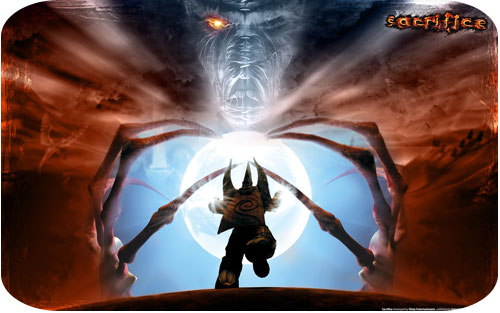
A Shiny Entertainment design released by Interplay in 2000, Sacrifice may be the quintessential good old game on Good Old Games. The game is nine years old but it never ever feels quaint or archaic.

I’m not sure how long Shiny took to develop it but assuming it took two years then the genre game of the moment fresh on the developer’s minds when starting must’ve been Myth: the Fallen Lords and its sequel. It’s tempting to look for similarities between the two. Much like Myth, Sacrifice takes the player closer to the grunt’s view of battles. Much like Myth’s story, Sacrifice’s story is fantasy at its darker boundaries. Much like Myth’s grunts, the player character is but a pawn in a game played by major powers.

In terms of gameplay influences, however, you will have to look to a much older game. Shiny set out to create a new version of Chaos, a Julian Gollop design that appeared on the ancient ZX Spectrum in 1985. I’ve not played that game and judging from this video of Chaos’s gameplay there doesn’t appear to a tremendous influence beyond the concept of wizards using summoned creatures to battle each other.

(In another game connection, Sacrifice’s lead designer and head writer would later move to ArenaNet to work on Guild Wars. Given ArenaNet’s obsessive habit of dropping pop culture references, it’s once again tempting to look for similarities. The use of in-game cinematics to advance the story, the end of the time of the five gods, the use of prophecy to manipulate events, betrayals, a rebellious centaur …. there are similarities though none of any great significance.)

For all those similarities and connections, it’s likely Shiny were determined to be as different as possible in order to stand out after the great ’97/’98 RTS glut of Command and Conquer derivatives, and stand out Sacrifice certainly does.

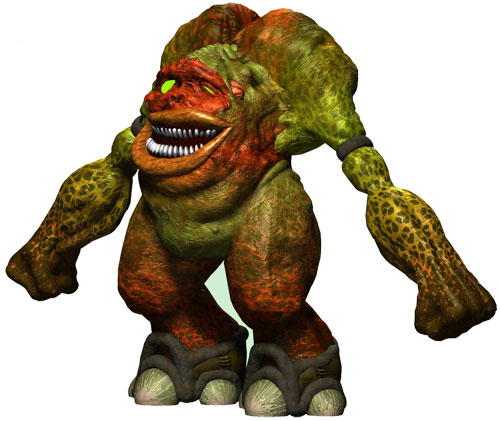
Sacrifice Troll

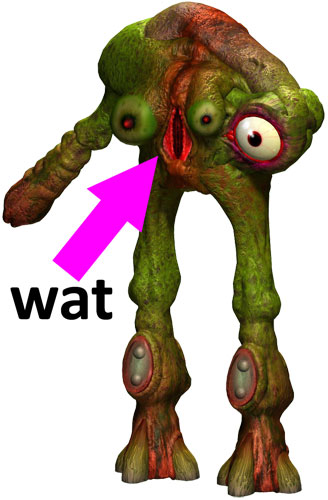
The art design is definitely different with some of the character designs bordering on gross. Whose idea was it to have an artillery unit that grabs viscera through a suspiciously-familiar orifice to chuck at targets? What were they thinking? What therapy preceded, what followed? Forget whatever preconceived notions you may have of what Ents and Trolls should look like and simply revel in the originality of Sacrifice’s character designs.

Similarly, forget whatever preconceived notions you have of an RTS and how it should play when playing this one. I don’t consider myself an RTS die-hard but I put enough hours into C&C, Red Alert, Total Annihilation and Myth to feel uncomfortable playing my first Sacrifice campaign. I seemed to be constantly wrestling with Sacrifice’s way of doing things, always fretting that I wasn’t doing them the way they ought to be done. Once I let go of my hang-ups about how I should be playing the game, things flowed well. My second campaign was an enjoyable romp and I feel completely at home on my third.

Sacrifice is undeniably different and more than a little strange considering its genre but it is a good game and the fact it remains good nine years later makes it a serious candidate for “great game”.

The game is available at multiple digital distribution services but I would strongly recommend going with GOG due to the combination of the low price and the bonuses (wallpapers, concept art, etc.).

Posted in Games, Good Old Games.


Game ads

10 ads for games: 1 infamous, 9 cool.
“What if people who were deeply passionate about games created ads for games they loved?”

Posted in Games.


Freedom!

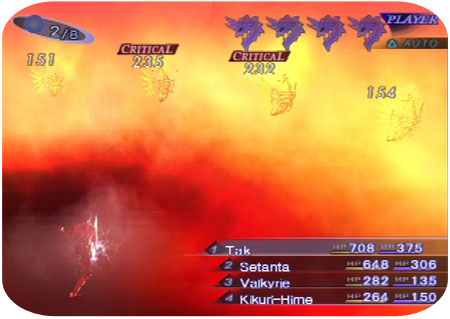
Shin Megami Tensei III: Nocturne: Critical weaknesses

(Original image source: Atlus.)

Shin Megami Tensei III: Nocturne completed!

Or at least I’ve completed one of the endings, the only one that resonated with me. There are six altogether but I very much doubt I’ll try to get the others. The game isn’t especially hard, but it can be incredibly vexing, and the prospect of going through it all over again simply to get an unsatisfying ending leaves me cold.

The game is certainly beatable without guides, hints and tips, but I can understand why the Nocturne guide is such a popular item. Going it on your own, as I did, was an aggravating experience. The second half of this game has some poor level designs with the Red Temple, White Temple and upper half of the final tower being especially horrible. These wretched designs required no skill or thought to complete; the player simply needed to try a few dozen possibilities one after another to find the one correct path that allowed progress.

To be fair, there are a few dungeon levels in the game with clever little logic puzzles that are quite satisfying to complete, but my overwhelming impression is the developers were padding the game with large amounts of random encounters along with design elements which require investments of time instead of skill.

If you’re ever faced with a choice between Nocturne and Persona 3 FES, I would recommend going with the latter every single time. P3F’s mundane high school setting may have less appeal compared to Nocturne’s dark and edgy vibe, but P3F, a newer Atlus game, is a much more refined design.

Clearly, Atlus managed to learn something from Nocturne’s critical weaknesses.
Continued…

Posted in Games, PS2.


MP and the demonic EMT

Even in the post-apocalyptic Tokyo of Shin Megami Tensei III: Nocturne, healthcare is a pressing issue. When your lifestyle requires battling demons on a regular basis, you will quickly feel the need for dependable health services since the cumulative effect of multiple encounters within a short period of time will wear the party down.

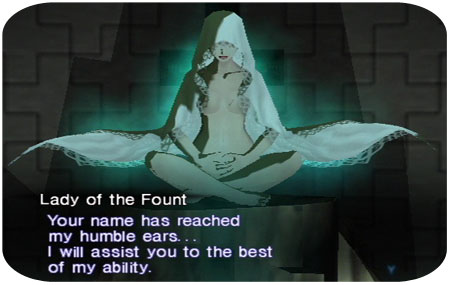
The Vortex World’s primary healthcare provider is the Lady of the Fount, an underdressed medical professional with franchises in major cities and dungeons. These visits to recover HP and MP, revive the dead and remove curses require payment. Yes, even in a demon-infested world awaiting imminent rebirth there are enterprising profiteers. What she plans to do with all that money is an unexplained mystery. Clothes, perhaps?

Shin Megami Tensei III: Nocturne: Lady of the Fount

(Original image source: Atlus.)

As far as the player is concerned, money will not be a problem by mid-game and the main healthcare concern is less about cost and more about convenience. With no rest mechanic in the game to allow the party to recuperate between visits to Dr. Half-Nekkid, the party must be self-sufficient to prevent attrition prematurely curtailing excursions into Nocturne’s many labyrinthine dungeons. The unpleasant alternative is backtracking to the Lady of the Fount (fighting demons all the way), healing the party then fighting all the way back towards the original destination only to find you need healing once again.
Continued…

Posted in Games, PS2.