Skip to content


More Majesty Gold, your majesty

Majesty Gold: Venn's Top 10

The game was conceived after lead designer Jim DuBois watched one of his units in The Settlers II going about his business.  (Source.)

The original design document was done in 1996 but Cyberlore had trouble finding a publisher for this unusual game. (Source.)

The Wizard’s cry of “Abderrazzaq!” was a tip of the hat to (then) Hasbro Interactive producer Marwan A. Abderrazzaq.  (Source.)

The peasant woman (“I serve with pleasure.”) is actually a man.  (Source.)

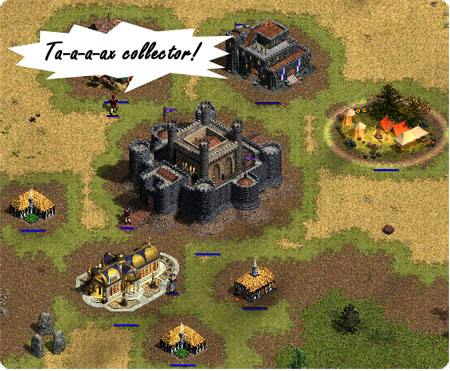
The tax collector’s voice was inspired by Paul Lynde.  (Source.)

The highest level heroes are apparently Wizards in the 150s. (Source.)

The music composer also worked on Sacrifice.  (Source.)

Computer Gaming World awarded Majesty the Pleasant Surprise of the Year in 2001 but the game lost out to Sacrifice in the Best Strategy Game of the Year category. (Source.)

There’s a browser-based role-playing game inspired by the game.  (Source.)

By 2007, the game sold over 500,000 copies worldwide.  (Source.)

Posted in Games.


Majesty Gold, your majesty

Majesty Gold: tax collector

Majesty: the Fantasy Kingdom Sim is a curious RTS. It certainly has all the genre conventions. There is a build queue and a tech tree, micromanagement and resource management, and for the most part the game plays out like a conventional RTS. You explore the map, exploit your sources of wealth, expand your base and exterminate your enemies.

Majesty’s major break with the standard RTS formula is the player has no direct control of individual units. You do not command and conquer in this game; you cajole and hope for the best.

Although you may rule, the heroes roaming your kingdom are not yours to command, being more private military contractors than servants of the realm. Instead of directing them hither and thither through royal edict, you provide heroes with monetary incentives to attack or move. Perhaps a 200 gold reward for the brave explorer who will venture to that undiscovered land over yonder, perhaps a 300 gold bounty on the head of the troll rampaging at the marketplace.

The unpredictability in this game, which may delight as much as frustrate, lies in the fact the heroes may not take you up on your offer, deciding instead to return home for a lie-down or do a spot of shopping. They display individual behavior that can be both charming and aggravating. Groan at the Warrior scarpering away at the first sign of danger; gape at the Paladin valiantly standing her ground despite being surrounded by foes; chuckle at the enemy Rogue who eagerly destroys his own guild for your gold.

Similarly, playing Majesty on a modern machine may involve equal amounts of delight and unpredictable frustration. While getting this quirky game is relatively easy these days as it’s available on multiple digital distribution services and playing it is mostly an enjoyable experience, you may have to get past some technical issues first.

Majesty Gold: technical issue

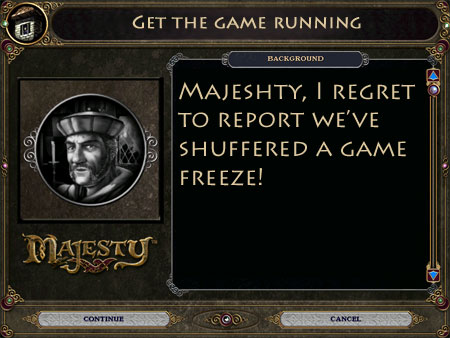
The main problems plaguing the Steam version include freezes and frequent crashes-to-desktop. There are various folk remedies to get the game to behave itself. Deleting or replacing the Bink video player did nothing for me. Upgrading to the latest nVidia graphics driver or reverting to a much older graphics driver had little effect. I didn’t bother deleting the music but apparently it works for some.

The workaround that worked in my case was setting the CPU affinity to a single core. To do this in Windows XP, Alt+Tab out of Majesty once it’s running (be sure to Alt+Tab after bypassing the opening videos or the game will crash), hit Ctrl+Alt+Tab to bring up Windows Task Manager, switch to the Process tab, right-click on Maj.exe (or MajX.exe if you’re playing Northern Expansion), select the “Set Affinity…” option then set the CPU affinity to a single core.

The game still crashes on rare occasion even with this fix so I’d strongly recommend enabling the Auto-Save option.

Posted in Games.


Reviews of might and magic

Back in the 80s and early 90s, a reviewer could have a major impact on both gamers and developers. Everything was still relatively new and shiny and bright, both consumer and creator needed someone to separate the wheat from the chaff, to highlight the obscure, to champion the worthy, to excoriate the worthless.

There were a few game reviewers who had made a name for themselves and they could be found exclusively at the major game magazines of the day. The magazine of choice for the discerning gamer back then was Computer Gaming World. Under the helm of Johnny Wilson, CGW did more to educate gamers about the state of the hobby than any other magazine around. If you wondered why games could be both overdue and released prematurely, you’d read a CGW editorial and be enlightened.

The tone was serious, academic and occasionally, a little stuffy, but perhaps understandably so. This was a time when computer games were still thought to be a peculiar pasttime for an adult and “You play games?” still merited a defensive answer. It was a time that called for thoughtful discourse about the hobby rather than frivolous and forgettable Top 10 So-Wacky lists.

The magazine had undeniable influence. A comment in a CGW review about how Balance of the Planet was not fun perhaps led to Chris Crawford‘s epic The Dragon speech in 1992. The magazine’s Top 100 Games reader poll was gamed by game publishers in a bid to influence sales.

The influential voice for the RPG and adventure genres at CGW was the mysterious Scorpia. For an incredible 16 years, she reviewed games for the magazine, playing games right to the end because it was the CGW editorial policy back then and because she felt her readers deserved a complete review. In doing that, she’d often find bugs and problems even the publishers weren’t aware of or were apathetic about. If you wanted an opinion about an RPG, you’d go to her. If you were stumped in a game in that pre-GameFAQs era, you’d read her fantastic hint column which creatively provided solutions cryptically. She knew these games inside out.

I was recently reminded of her influence while playing Might & Magic III: The Isles of Terra. From Scorpia’s review of Might & Magic II (Computer Gaming World # 57, 1989):

“… Might & Magic II seems to have swerved off the path in the boring ‘monster mash/Monty Haul” direction, where ever-more-powerful characters with ever-more-powerful weapons fight ever-more-powerful monsters until it all escalates into the realm of the ludicrous.”

Her summation:

“Not up to par with the original; great graphics but emphasis on
combat overshadows all else. Great for monster mash lovers, but not recommended for others.”

New World Computing’s distasteful response in Might & Magic III:
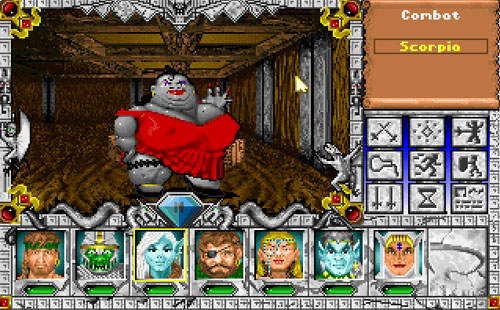
Might & Magic III: The Isles of Terra: Scorpia

It’s hard to imagine any current game reviewer having that sort of impact, getting that sort of response from a developer. The major game sites and what few magazines are left may have some clout but an individual game reviewer? There’s no Walter Mossberg of computer game reviews, no Pauline Kael.

This is not exactly a bad thing. After all, why be beholden to a single opinion? Why should one voice be all-powerful?

Still, some voices deserve a wider audience and it’s perhaps criminal that someone with Scorpia’s reviewing experience should not have a platform at one of the major game review sites.

(She did have her own site for about three years but had to recently stop due to financial reasons.)

I would dearly love to see one of the gaming sites give her a regular spot and let her opine on today’s RPGs. For instance, what would someone with her extensive experience with the classic RPGs make of the Shin Megami Tensei, Final Fantasy or Dragon Quest franchises? After all, JRPGs took inspiration from western RPG classics before they, too, swerved off the path and took off in their own direction. What parallels could still be found, what’s better, what could be improved? Does Dragon Age’s world live and breathe like Ultima VII’s? Is it as an idealistic and noble an undertaking as Ultima IV?

We’ve got a site for good old games; perhaps it’s time for someone to give good old reviewers the same love and attention.
Posted in Games.


Fantastic Four: Wow

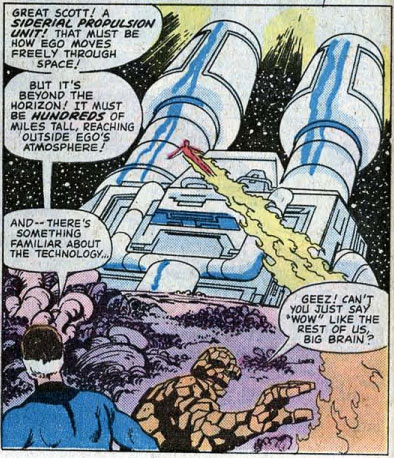
From Fantastic Four # 235 (1981):

Fantastic Four # 235

Two pages later:

Fantastic Four # 235

Posted in Comics.


Days of might and magic

Might & Magic III: cover

Every once in a while I get an intense longing to try a game genre I’ve not experienced in a while. These cravings are entirely unexplainable and often lead me to strange purchasing decisions. I’m a big fan of the PlayStation Portable but I have to admit the main reason I got it back in 2005 was because suddenly, inexplicably, I had a yearning to rearrange falling blocks.

Flash forward to a few weeks ago, I had an intense longing to play a dungeon crawler. This longing was not entirely inexplicable, however. I was gritting my teeth through Shin Megami Tensei: Nocturne’s inconsistent designs right about then and I really wanted to play a game that did dungeon crawling right.

I specifically had a craving for Dungeon Master as it was to my mind still the finest example of the genre. I was very keen to discover if the FTL Games classic was every bit as good as my memories of playing it on the Atari ST suggested. The innovative spellcrafting system, the devious puzzles and remarkable realism all combined to create a game that was not only ahead of its time but rarely surpassed. Or so my memory had me believe.

Alas, I lack the means to experience Dungeon Master again. My Atari ST is junk, the floppy discs but a memory and it seems that longing will remain unfulfilled for now. If only some digital distribution service that specialises in old games that are good would grab the rights for the PC version of this title.

Hint, hint.

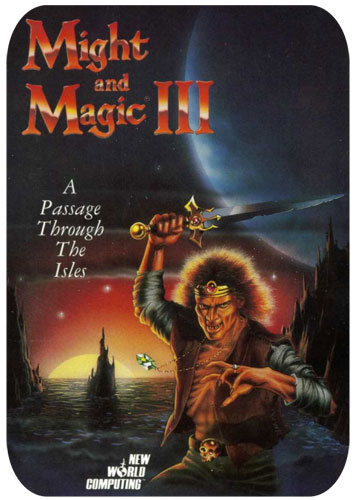
However, by sheer coincidence, Good Old Games did choose to release Might & Magic VI: Limited Edition, a package containing the first six Might & Magic games. Having put a few hours into the third title of the franchise back in the day, I knew perfectly well the M&M games were essentially low-calory RPGs. With all due respect to New World Computing, I found the M&M style significantly less ambitious than the gold standard that was Ultima. Still, the thought of seeing how well these old timey hackenslashers held up was appealing.

There was also the matter of satisfying that dungeon crawling craving.
Continued…

Posted in Games, Good Old Games.