Skip to content


Din’s Curse: Hardcore Heroes

Action RPGs tend not to be deep, complex games — a key factor of the subgenre’s appeal to many. They’re very easy to get into — if you can point your mouse cursor and left-click, you’re good to go — and aren’t especially taxing. Two hours of intense PvP action on a competitive FPS server will leave the average gamer frazzled; two hours into a Diablo-like, the player would be perfectly happy to spend more time to finish a few more quests for the next tantalising level-up ding. The mechanics are so simple, the decision-making so limited, the action so repetitive, most players can plough through these games almost on auto.

It helps a lot players aren’t normally penalised heavily for failure. Death is usually a trivial inconvenience less painful than a stubbed toe. There may be some minor loss of XP (which can be quickly recouped) and some retracing of steps to be done but these penalties are so insignificant there’s little incentive to stay sharp and focused while hacking and slashing through hordes of foes.

This is not to say Diablo-likes are completely devoid of challenge. There is challenge enough within them to satisfy even the most hardcore of the hardcore but players must actively seek them out. By increasing the difficulty levels and enabling the permadeath option, action RPGs can go from near-mindless comfort gaming to genuine tests of skill as encounters which are otherwise straightforward turn into epic heart-in-mouth struggles.

Unfortunately, few action RPGs encourage this. These games constantly reward with XP, level-up skill improvements and loot but provide very little incentive to ramp up the difficulty, leaving the player with only the daunting penalties that go hand-in-hand with greater challenges.

Permadeath, in particular, seems an unduly harsh punishment and all the more so given the hours a player might put into each character, carefully tweaking the build and kitting out the character with the best possible gear. For those who’ve never tried playing with permadeath enabled, it may seem a completely mystifying way to play, a choice for masochists and the foolhardy. There can be no avoiding death in action RPGs, only a delaying of the inevitable, so why deal with the frustration of permadeath?

Yet the greater the risk, the greater the intensity of experience and ultimately, the more rewarding success becomes. A level-up ding is satisfying in normal mode; with permadeath enabled, each level-up is a fist-pumping moment, hard-won and well-earned, a testament to skill and endurance. Still, that thrill will never be experienced unless there is proper inducement to give this high-risk style of play a try.
Continued…


Posted in Games.


The Box

The box
The box
The box
The box
Continued…

Posted in Games.


Din’s Curse

Dallas-based Soldak Entertainment was started by a man who really wanted to make RPGs. Steven Peeler left Ritual Entertainment after working there for six years because there was no chance of him making the games he wanted to make at an FPS shop. It’s a good thing for gamers he made the move to the indie scene because he’s produced some interesting action RPGs which deserve greater attention.

Peeler’s ambitious first design, Depths of Peril, added some fascinating twists to the stale Diablo formula. His most recent game, Din’s Curse, is better focused, more refined and quite good. If you think you’ve seen everything action RPGs have to offer after playing Diablo and Torchlight, you need to play Din’s Curse.

Continued…

Posted in Games.


Mount&Blade: Partying in Calradia

Sid Meier didn’t care too much for RPGs. In High Score! The Illustrated History of Electronic Games, he complained the genre promised excitement, adventure and plot yet often failed to deliver. As he put it, “… kill this monster, get five exp, kill that monster …”

(Bear in mind, these were RPGs circa 1986. Ultima IV: Quest of the Avatar set a new high-water mark when it was released in 1985 but other RPGs of the era were mainly content catering to AD&D munchkins.)

He set out to remedy that with Pirates! in 1987 and in the process did away with some RPG conventions. Instead of a rigidly defined plot, the player was free to weave a personal storyline through the many choices the game offered. In lieu of XP and levelling up, players raised their reputation with the ultimate goal being to attain a respectable position in society when their pirate career ended.

Taleworlds, on the other hand, wholeheartedly embraced RPG traditions when designing Mount&Blade and its sequel, Mount&Blade: Warband. The series’ RPG elements are both overt and conventional: there’s stats-driven character development, a party to manage and even NPC allies with distinctive personalities.
Continued…

Posted in Games.


Mount&Blade: Conflict in Calradia

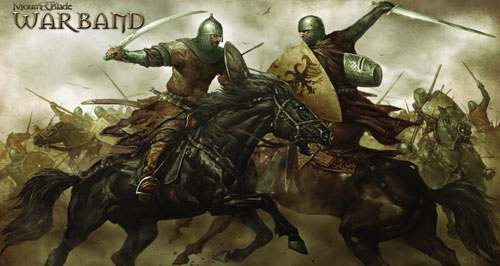
Mount&Blade: Warband

There was nothing quite like Sid Meier’s Pirates! when it was released in 1987. It was a true sandbox in that it was not only nonlinear and open but more importantly, there were multiple roles that were viable within its game space. The player could choose to be a pirate or a pirate hunter, a trader or a plunderer, loyal to a flag or self-serving, motivated by profit or familial obligations. There were numerous choices to be made throughout the course of a campaign, and those choices had enough payoffs, tradeoffs and drawbacks to require deliberation before making a decision. All of that meant each Pirates! playthrough could be a unique adventure.

While Mount&Blade and its sequel, Mount&Blade: Warband, are set in the fictitious Calradia rather than the Caribbean, set on land rather than seas, Turkish developers Talesworlds has done a great job of capturing the Pirates! spirit without slavishly reproducing Sid Meier’s design.

The biggest difference between Mount&Blade and its inspiration is the way combat is handled. Sid Meier didn’t want the Pirates! action sequences to distract from the main flow of the game so combat was simplified and abstracted. The player could command of a fleet of ships in Pirates! but sea battles were resolved through one-on-one battles. Similarly, boarding an enemy ship might see hundreds of sailors do battle yet the outcome hinged on a duel between the individual captains. As a result, battles in Pirates! were quickly concluded, letting the player get back to making interesting choices to craft unique storylines.
Continued…

Posted in Games.